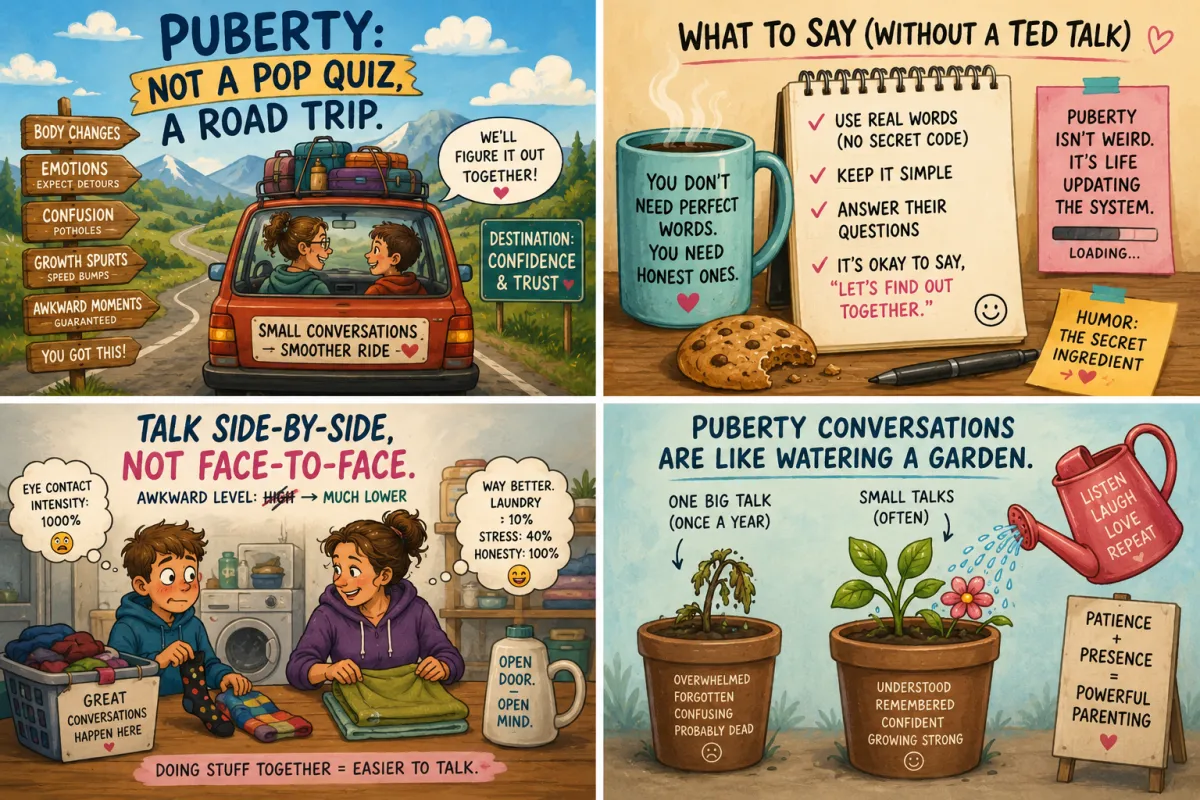
How Do I Talk About Puberty Without Making It Awkward?

How to Talk About Puberty Without Making It Awkward
Talking about puberty can feel a lot like teaching a cat to swim.
Technically possible? Maybe.
Comfortable for everyone involved? Not even slightly.
For many parents, the thought of discussing puberty triggers the same nervous energy as giving a wedding speech without notes. Suddenly, words disappear, palms sweat, and somehow the weather becomes a fascinating topic.
The good news is that talking about puberty doesn't have to feel like you're defusing a bomb with a spoon.
With the right approach, these conversations can become surprisingly natural—and maybe even a little funny.
When Should You Start Talking About Puberty?
Many parents wait for the mythical "perfect moment."
Unfortunately, the perfect moment tends to hide in the same forest as unicorns and tax refunds that arrive early.
The truth is that puberty conversations work best when they begin before major changes occur. Think of it like handing someone a map before they enter a maze.
Rather than one giant, dramatic "Puberty Summit 2026," aim for smaller conversations spread over time.
Puberty isn't a single event.
It's a long road trip with unexpected detours, mystery snacks, and occasional emotional potholes.
What Should You Actually Say?
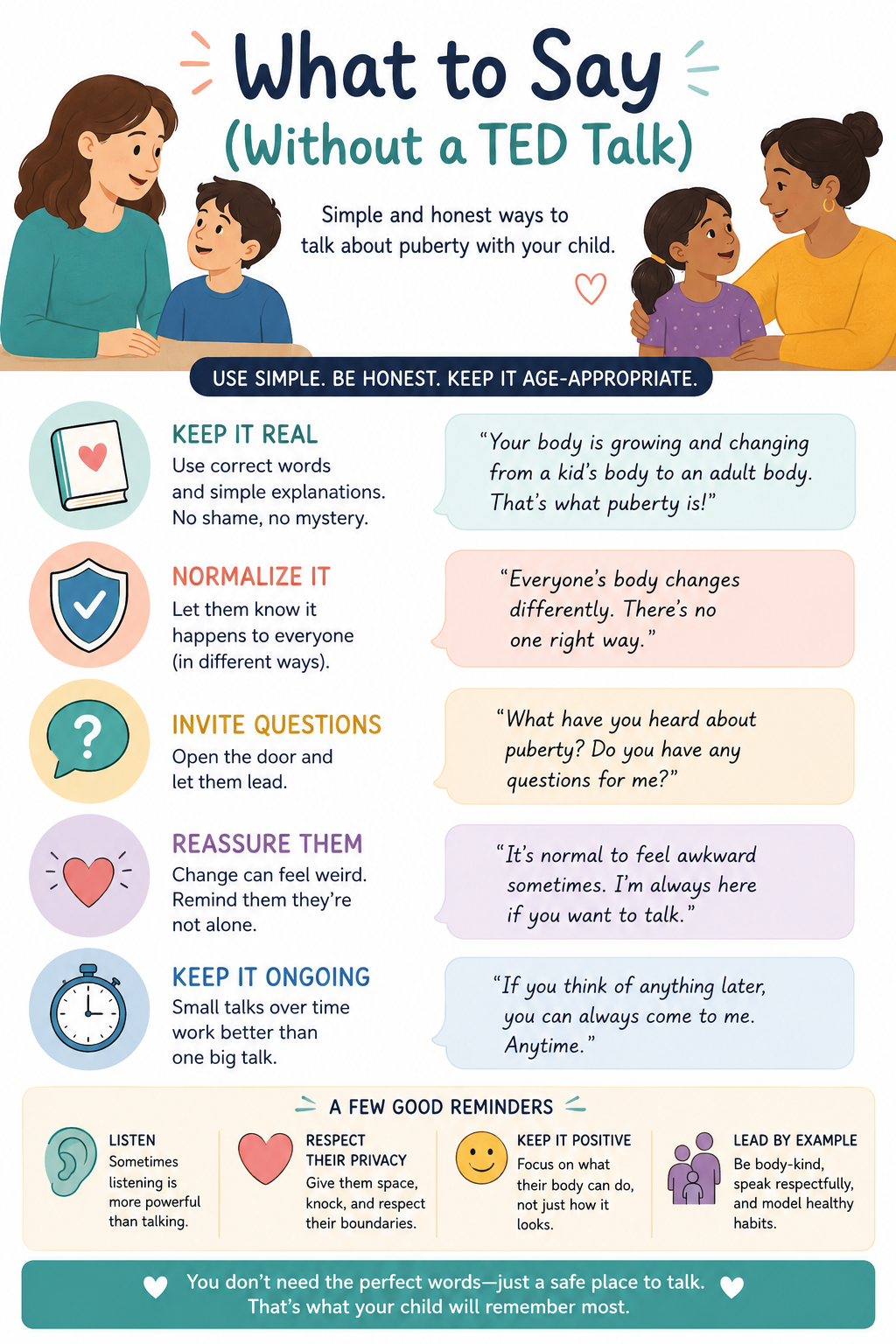
Here's a secret that may save you from unnecessary stress:
You don't need to become a biology professor overnight.
Children aren't looking for a forty-minute presentation complete with charts and laser pointers.
Most of the time, they're simply looking for honest answers.
Explain that puberty is a normal stage of growing up. Talk about body changes, growth spurts, voice changes, body hair, skin changes, and emotional shifts in age-appropriate ways.
Use real words rather than mysterious code phrases.
Humor helps too.
Think of puberty as your child's personal software update. New features arrive, old settings change, and occasionally the entire system seems to reboot for no obvious reason.
How Do You Avoid the Awkwardness?
Here's the surprising truth:
You probably won't completely avoid awkwardness.
And that's perfectly okay.
Trying to eliminate every trace of awkwardness from a puberty conversation is like trying to keep ketchup off a toddler's shirt.
Instead of aiming for perfection, aim for comfort.
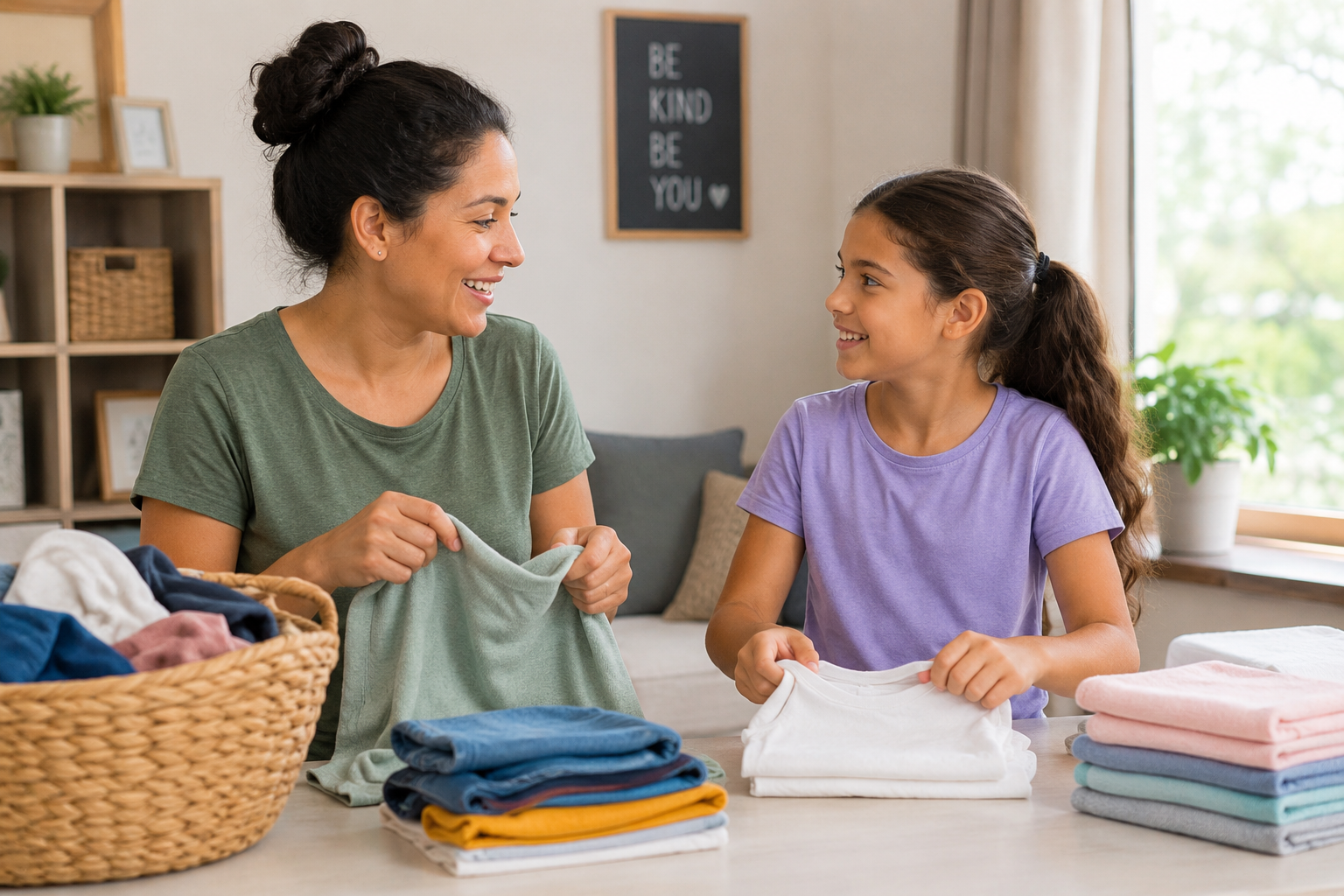
One of the best tricks is talking while doing something together.
A walk.
A car ride.
Cooking dinner.
Folding laundry.
Something magical happens when nobody feels trapped in an intense staring contest.
The conversation becomes easier, lighter, and far more natural.
The Biggest Mistake Parents Make
Many parents treat puberty like a one-time emergency announcement.
"Attention everyone! Please gather in the living room for an important presentation about hormones."
Not surprisingly, this approach rarely earns rave reviews.
Instead, think of puberty discussions like watering a garden.
Creating a Safe Space for Questions
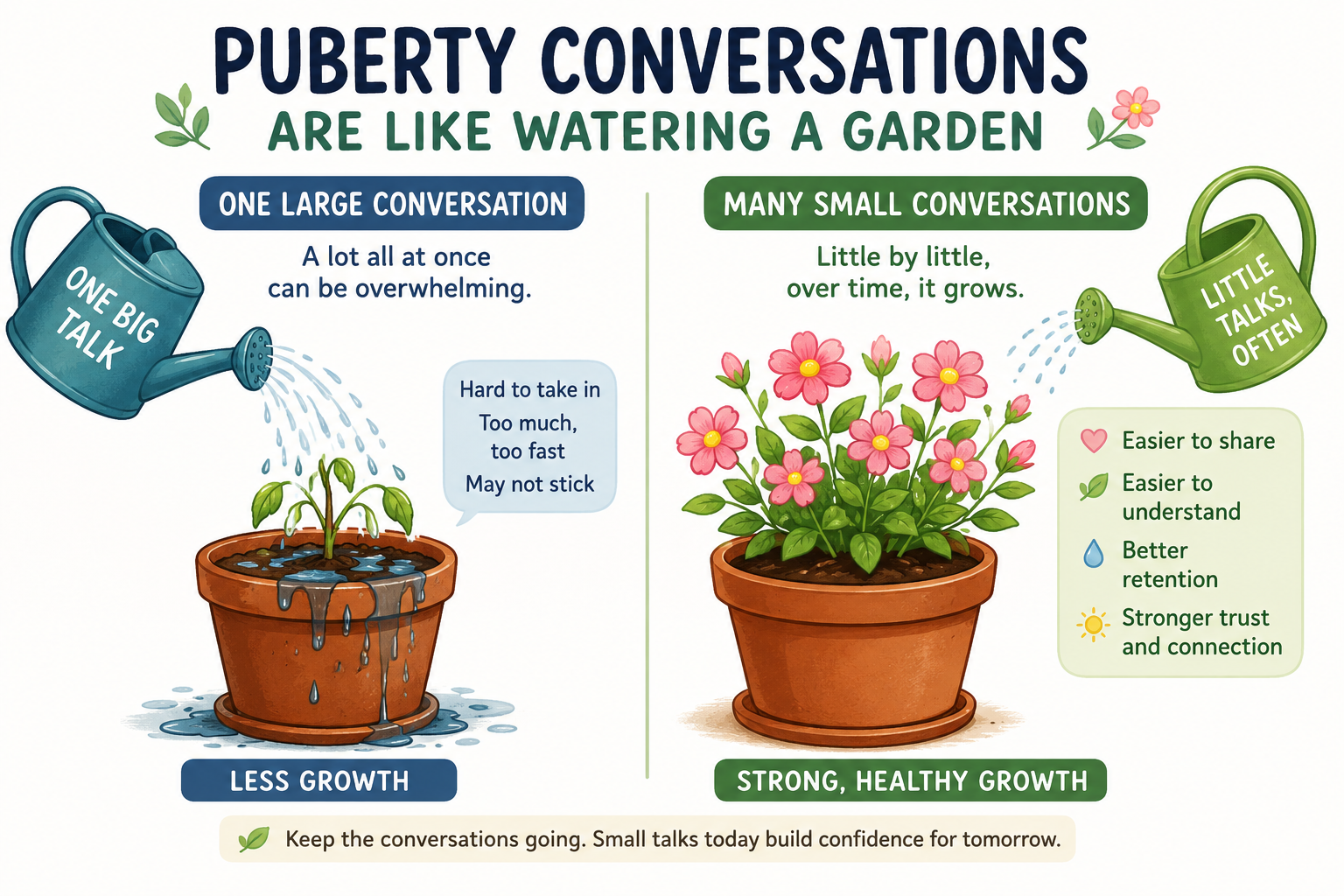
Small conversations delivered consistently help trust and understanding grow.
The greatest gift you can give your child isn't a flawless explanation.
It's a safe place to ask questions.
When children know they can approach you without embarrassment or judgment, they're far more likely to seek guidance when challenges arise.
Listen calmly.
Answer honestly.
Avoid overreacting.
And remember that if your child asks an unexpected question at the grocery store checkout line, that's simply parenting's version of an extreme sport.
If you're looking for additional parenting resources, guidance, and support from others navigating the same journey, visit Parent Support Circle: https://www.parentsupportcircle.com
Final Thoughts
Puberty is simply life's renovation project.
The walls get moved.
The wiring gets upgraded.
And occasionally somebody wonders why strange noises are coming from the attic.
Your job isn't to eliminate every awkward moment.
Your job is to be the trusted guide holding the flashlight.
And trust me—that matters far more than finding the perfect words.


