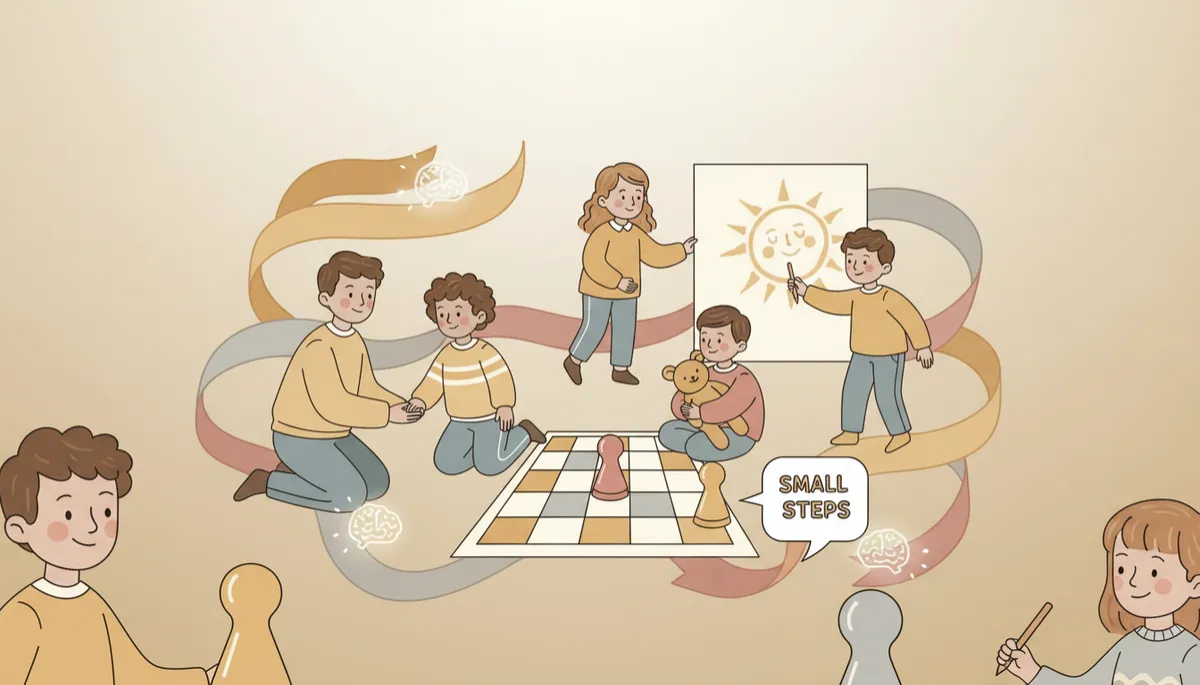
Helping Kids with Anxiety: A Real-Parent Guide
Parenting, Child Anxiety, Emotional Health
How Do I Help a Child With Anxiety? A Fun, Real-Parent Guide
If your child worries, clings, melts down, or suddenly has a “mystery stomachache” every time something new happens… welcome. Grab a snack, hide in the bathroom for three minutes if you need to, and let’s talk about helping anxious kids with warmth, humor, and real-life tools that actually fit into busy family life.
London’s Stomachache: When Worry Shows Up as “Ouch”
Let’s start with London. London is eight, loves graphic novels, and has very strong opinions about which cup is acceptable for orange juice. One Tuesday morning, London woke up with a stomachache. Not just any stomachache. A dramatic, full-body, “I cannot possibly go to school, Mother, my organs are melting” stomachache. (London is also a bit of a poet.)
At first, it looked like a regular kid thing. Maybe gas. Maybe too much bedtime cereal. Maybe the universal childhood illness called Monday-But-On-A-Tuesday. But as London curled tighter on the couch, something else showed up: questions. Endless questions. “What if my teacher is mad?” “What if I can’t find my classroom?” “What if I throw up in front of everyone?” Suddenly, this wasn’t just a tummy issue. This was anxiety in a very convincing costume.
London’s grown-up (we’ll call them “you,” because if you’re reading this, it might as well be) did what most loving parents do: rushed in with reassurance. “You’re okay. You’re safe. Your teacher likes you. No one is going to laugh. It’ll be fine. You’ve gone to school a million times!”
For about 30 seconds, that seemed to help. London sat up. Then: “But what if…?” And the worry carousel started spinning again. More stomachache. More tears. More “I can’t go.” If this sounds familiar, you are extremely not alone. At Parent Support Circle, we hear versions of London’s story from moms and dads all the time. So let’s unpack what’s actually going on — and how you can help your anxious child in ways that calm their body, build their courage, and don’t require you to turn into a 24/7 reassurance vending machine.
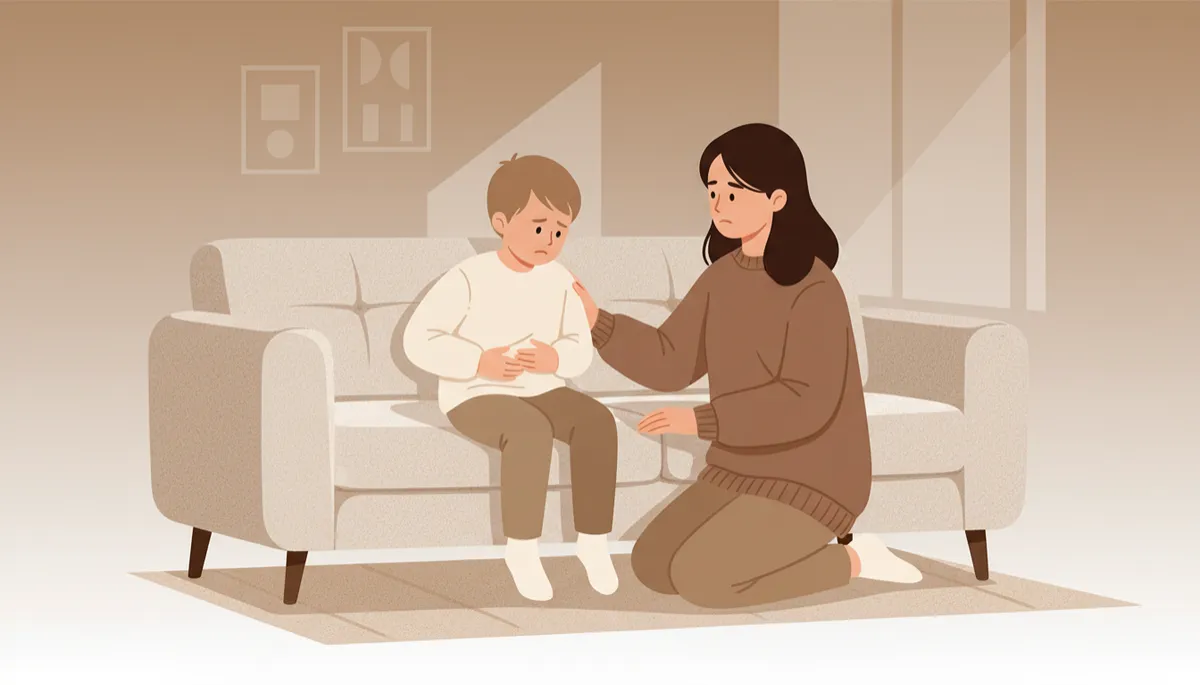
Many kids’ anxiety sneaks in disguised as tummy aches, headaches, or “I just don’t feel right.”
Ordinary Worry vs. Anxiety: When Is It “Too Much”?
First, a little good news: worry is normal. If your child never worried, that would actually be weird. Ordinary worry is the brain’s way of saying, “Hey, new thing! Let’s pay attention.” It pops up before a spelling test, a sleepover, or trying broccoli that looks suspiciously like a tiny tree. Then, once the new thing happens, the worry fades. The child goes on with their day, maybe grumbling about the broccoli, but generally okay.
Anxiety, on the other hand, is like worry that drank three cups of espresso and refuses to leave the party. It:
Shows up often, even when there’s no real danger
Feels big in the body — racing heart, sweaty hands, shaky legs, stomachaches, headaches
Makes your child want to avoid things: school, friends, sports, bedtime, even fun stuff like parties or playdates
Doesn’t go away easily, even when you explain, reassure, or promise “It’s okay” a hundred times
With ordinary worry, your child might say, “I’m kind of nervous,” but still go to the birthday party. With anxiety, they might beg not to go, cry, complain of feeling sick, or shut down completely. Anxiety makes the brain yell, “Danger!” even when the situation is actually safe. And because kids’ bodies are connected to their brains (surprise!), they really do feel awful — just like London’s stomachache before school.
💡 Quick check-in: If your child’s worry is getting in the way of school, sleep, friendships, or daily life — or if you’re just not sure — it’s always okay to talk with a pediatrician or therapist. You’re not overreacting. You’re being a caring, proactive parent.
Why Reassurance Can Backfire (Even When It’s So Loving)
Let’s go back to London on the couch. You’re offering your best, sweetest, most loving reassurance: “You’re safe. Nothing bad is going to happen. I promise.” That’s what good parents do, right? Yes… and also, this is where anxiety gets sneaky.
Here’s the tricky part: every time you reassure an anxious child, something else gets a little stronger too — their need for reassurance. It’s like anxiety is whispering, “See? You can’t handle this on your own. You need Mom/Dad to tell you it’s okay every single time.” So the next day, and the next week, and the next spelling test, they need more and more of your calm words just to feel “okay enough” to try. You become their emotional Wi-Fi, and they panic when the signal drops for even a second.
It’s not that reassurance is bad. A little reassurance is like a cozy blanket. Too much reassurance, though, teaches the brain, “I can only feel safe if someone else tells me I’m safe.” Over time, this can actually feed anxiety instead of shrinking it. That’s why you might notice your child asking the same question over and over: “Are you sure?” “But what if?” “Promise?” It’s not defiance. It’s anxiety looking for another hit of reassurance.
📌 Key Takeaway: Reassurance feels helpful in the moment, but if it’s the only tool you use, anxiety learns to depend on it like training wheels that never come off.
What Actually Helps: Small Steps, Big Support
So if constant reassurance isn’t the answer, what is? The magic combo for helping a child with anxiety is: validation + small steps + support. Think of it as: “I see you. We’ll do this together. And we’ll practice being brave in tiny, doable ways.”
1. Validation: “Your Feelings Make Sense”
Validation means you don’t argue with their feelings. You don’t have to agree with the story anxiety is telling (“Everyone will laugh at me”), but you can agree that the feeling is real. Try:
“Your stomach really hurts, huh? That’s a tough feeling.”
“It makes sense you’re nervous. New things can feel big.”
“You’re not being dramatic. Anxiety can make everything feel huge.”
This doesn’t “give in” to the anxiety. It tells your child, “You’re not weird or broken for feeling this way. I get it.” That alone can turn the emotional volume down a notch.
2. Name the Anxiety: “That’s Your Worry Brain Talking”
Kids love a good character, so give anxiety one. In Parent Support Circle workshops, we’ve met “Mr. What-If,” “The Worry Monster,” and “Nervous Nelly.” When your child says, “What if I mess up?” you can say: “Sounds like Mr. What-If is really loud today.” Now the anxiety is a separate thing — not who they are, just something that shows up. And things that show up can also leave.
3. Small Steps: “We Don’t Have to Do the Whole Mountain Today”
Anxiety wants your child to either: avoid completely or dive in perfectly. We’re going to choose the middle path: small steps. Instead of “Go to the sleepover and stay all night,” you might say:
“Let’s drive there and stay for 30 minutes. If your worry is still huge, we can leave.”
“How about you try the first game, and then we check in?”
With London’s school stomachache, a small step might be: “Let’s get dressed and eat breakfast. We’re just doing the next thing, not the whole day yet.” Then: “Okay, now we’ll drive to school and talk in the car.” Breaking it down keeps the anxiety from feeling like a giant, impossible boss level and turns it into tiny, winnable missions.
4. Support: “You’re the Boss, I’m Your Coach”
Here’s where your role gets fun. You’re not the anxiety police, dragging your child through every scary thing. You’re their coach. Coaches don’t play the game for you, but they cheer, guide, and remind you how strong you are. You might say:
“You’re the boss of your body. I’m right here while you practice being brave.”
“We’re a team. Anxiety is the opponent. Let’s make a game plan.”
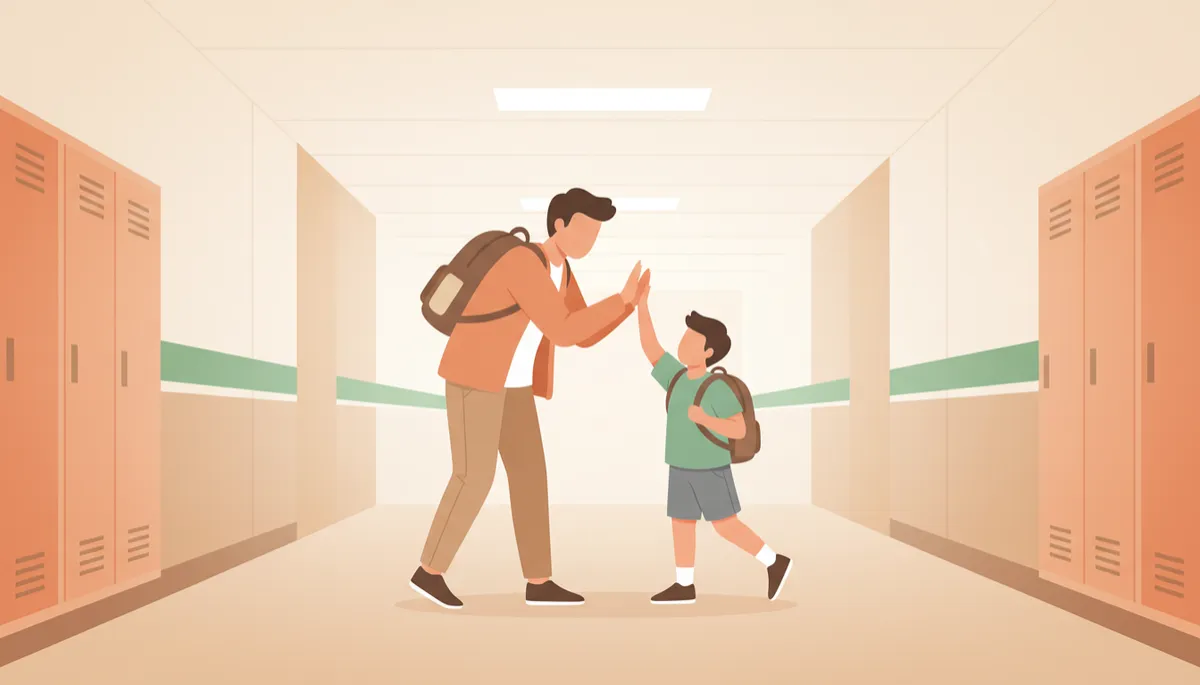
Celebrating tiny wins teaches anxious kids that courage grows one small step at a time.
Practical Tools You Can Use Today (Yes, Even on a Tuesday Morning)
Tool 1: The “Worry Scale” Game
Kids think in pictures, so let’s make anxiety visual. Draw a ladder or a thermometer and label it 0–10:
0 = totally chill, watching cartoons in pajamas
10 = “there is a T-Rex in my bedroom” level panic
When your child is anxious, ask: “Where is your worry on the scale right now?” If London says, “It’s an 8,” you can respond: “Okay, our job isn’t to get it to 0 before school. That’s too big. Our job is to see if we can help it move from 8 to 6.” This teaches that anxiety doesn’t have to disappear for them to do the thing. It just has to be manageable.
Tool 2: “Name 5 Things” Grounding Trick
When anxiety is loud, the body is on high alert. We want to bring your child back into the present moment. Try this simple game together:
Name 5 things you can see
Name 4 things you can touch
Name 3 things you can hear
Name 2 things you can smell
Name 1 thing you can taste
Turn it into a silly challenge: “Can you find 5 things that are green? 4 things that feel squishy? 3 things that make a sound?” This pulls their brain out of “What-if world” and back into the room with you, where they are safe and supported.
Tool 3: The “Brave Plan” Card
Make a tiny “Brave Plan” card or note with your child for situations that often trigger anxiety: school drop-off, bedtime, new activities. Keep it short and simple. For London’s school mornings, it might say:
1. Take 3 dragon breaths (slow in through nose, long out through mouth)
2. Tell Mom/Dad my worry in one sentence
3. Pick a tiny step (walk to classroom, say hi to friend, etc.)
Let your child decorate the card with doodles or stickers. The goal is not perfection; it’s giving their brain a script to follow when anxiety tries to hijack the moment. Over time, this builds confidence: “I know what to do when my worry shows up.”
Tool 4: “Support, Not Rescue” Phrases
Instead of only saying, “It’s fine, don’t worry,” try phrases that acknowledge the anxiety but also point toward action. For example:
“I know this feels scary, and I also know you can handle hard things with help.”
“Your worry is loud, but you’re in charge. What’s one small step we can take?”
“I’m not going to let anxiety be the boss of our day. Let’s team up against it.”
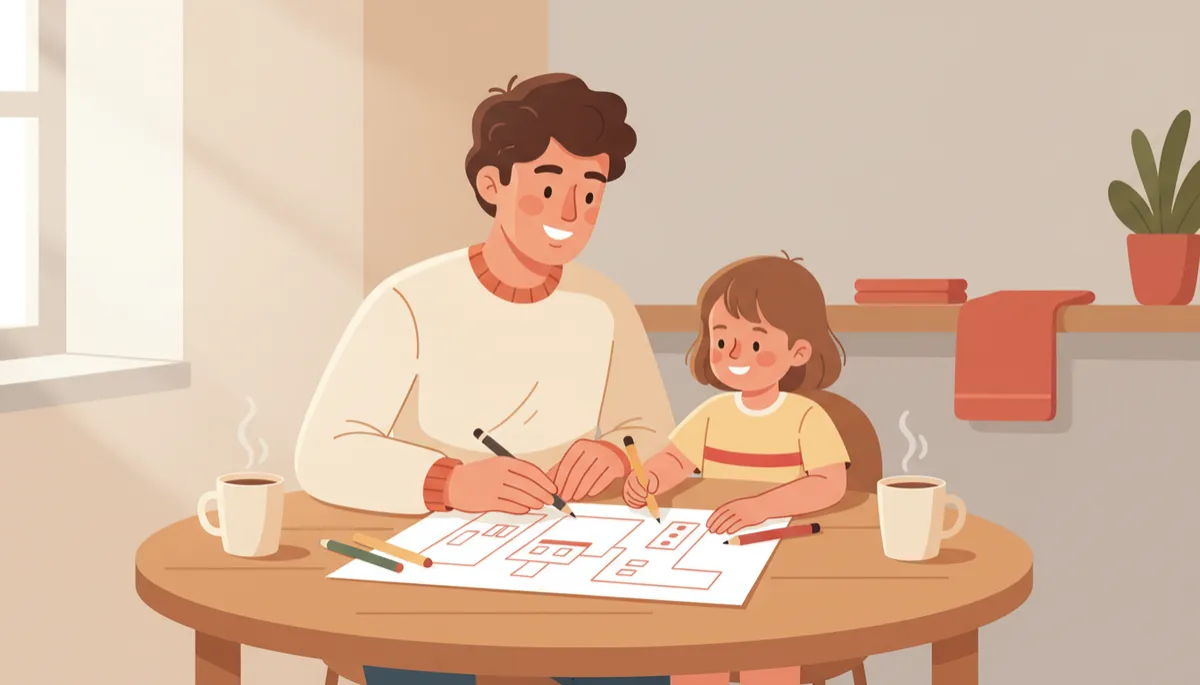
Planning ahead turns scary moments into challenges your child feels ready to face.
A Relatable Example From My House (Because You’re Not the Only One)
Let me pull back the curtain on my own home for a minute. I write for Parent Support Circle, but my house is not a calm, always-mindful parenting commercial. It’s more like: “Where did your other shoe go?” “Who put peanut butter on the dog?” and a rotating playlist of “I don’t want to go” from the tiny humans who live here.
One of my kids went through a phase where birthday parties were the ultimate anxiety trigger. Every invite led to tears: “What if I don’t know anyone?” “What if the games are too hard?” “What if they sing to me?” (Honestly, same, kid.) My first instinct was to reassure: “You’ll be fine! It’ll be fun! You love cake!” But the more I reassured, the more questions popped up like whack-a-mole. I could feel my own frustration growing. Sound familiar?
So we tried a different approach, using the same tools I’m sharing with you. First, I validated: “I get it. Walking into a house full of kids can feel like a lot.” Then we named the anxiety: “Sounds like your Worry Brain is telling you this party is a disaster waiting to happen.” My child actually laughed at that one, which was a good sign — humor is kryptonite for anxiety.
Next, we made a small-steps plan:
Step 1: We’ll drive to the party and stay in the car for a minute to check your Worry Scale.
Step 2: If your worry is 7 or lower, we go in and stay for 20 minutes.
Step 3: After 20 minutes, we check in. If it’s truly awful, we can leave. If it’s okay-ish, we stay a bit longer.
I also promised, “I’m not going to sneak away. I’ll be here.” That little piece of support made a big difference. At the party, my child clung to me for the first 10 minutes, then slowly drifted toward the crafts table. By the time we hit the 20-minute check-in, they were playing tag in the backyard, face painted, frosting on their nose, yelling, “Can we stay longer?”
Did this cure their anxiety forever? Absolutely not. The next party still came with some worry. But now we had a shared plan, a language for talking about anxiety, and a memory of, “Hey, remember the last time your Worry Brain said it would be awful, and it ended up being okay?” Each time, the anxiety got a tiny bit smaller, and my child’s confidence grew a tiny bit bigger. That’s the power of small steps and steady support.
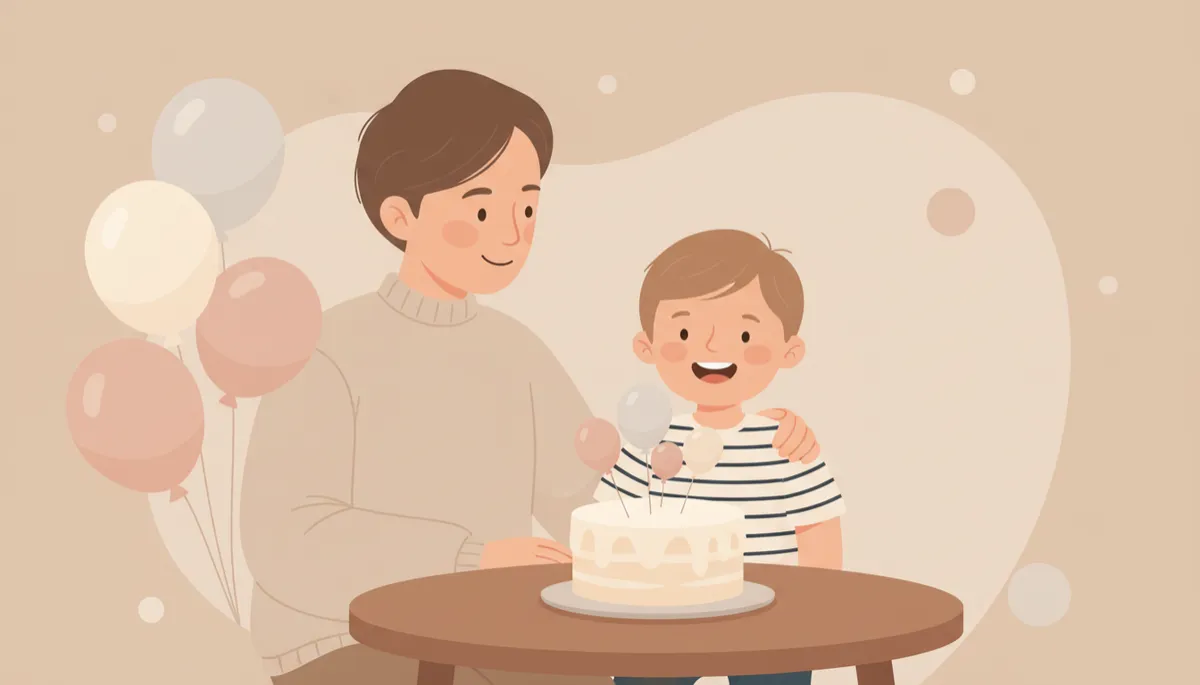
Real-life progress often looks like anxious kids having fun after a gentle, supported start.
Bringing It Back to London: A New Way Through the Stomachache
So what happened with London? Instead of pouring on more reassurance, London’s grown-up tried a new script. It sounded something like this:
Validate: “Your stomach really hurts and you’re worried about school. That’s a rough combo. I’m sorry it feels so yucky.”
Name anxiety: “Sounds like your Worry Brain is telling you school is super dangerous today.”
Small step: “We don’t have to do the whole day right now. Let’s just get dressed and see what your worry number is after breakfast.”
Support: “I’ll walk in with you and stay until the bell rings. You won’t be doing this alone.”
Was it magical and easy? No. There were still tears. There was still a stomachache. But London got dressed. London ate half a piece of toast. London rated their worry a 9, then an 8, then a 7. They held their grown-up’s hand all the way to the classroom — and then, after a deep dragon breath and one last squeeze, they walked in. That’s not “failure.” That’s a huge win for an anxious child.
You Deserve Support Too (Yes, You)
Helping a child with anxiety is not a one-day project. It’s more like learning a new family dance: awkward at first, full of missteps, and eventually something that feels surprisingly natural. Along the way, you’ll have mornings that feel like a win and nights where you crawl into bed wondering if you handled anything right at all. That doesn’t mean you’re failing. It means you’re parenting.
At Parent Support Circle, we believe you shouldn’t have to figure this out alone. You deserve the same reassurance, small steps, and support that you’re giving your child. You deserve other parents who will say, “Oh, your kid cries before school too? Pull up a chair.” You deserve tools that work in real life — not just in perfectly staged social media posts where everyone’s kitchen is somehow spotless.
💡 Remember: Every time you show up with empathy, curiosity, and a willingness to try again tomorrow, you’re already helping your child’s anxiety more than you realize.
Final Thoughts: Progress, Not Perfection
If you take nothing else from this long, snack-worthy read, take this: anxiety is not a parenting failure. It’s not proof that you did something wrong, or that your child is doomed to a lifetime of panic. Anxiety is a very loud, very dramatic part of some kids’ wiring — and with the right mix of understanding, small steps, and steady support, it can get a whole lot quieter over time.
You don’t have to be a therapist. You don’t have to say the perfect thing. You just have to:
Notice when worry is turning into anxiety
Shift from endless reassurance to validation, small steps, and support
Celebrate tiny brave moments like they’re gold medals
And on the days when you lose your cool, yell, or accidentally say, “You’re fine, stop worrying!” for the tenth time — you repair, you reconnect, and you try again. That’s real life. That’s real parenting. That’s more than enough.
If you’re craving more tools, more stories like London’s, and more people who will nod along when you say, “My kid has another stomachache,” we’d love to welcome you into our community at Parent Support Circle. You don’t have to do parenting — or anxiety — alone. Together, we can turn overwhelm into “Okay, I’ve got this… or at least, I’ve got people with me while I figure it out.”
🌿 Join the Parent Support Circle today — connect with other real parents, get practical support, and take your own small step toward a calmer, more connected home. Because you deserve just as much care as the child you’re so lovingly helping through anxiety.


