Fair Consequences for Tweens: A Parenting Guide
Parenting Tweens, Fair Consequences, Tween Discipline
What Consequences Are Fair When Rules Are Broken? A Guide for Tweens (and Their Grown-Ups)
Parenting a tween really is its own kind of adventure. One minute they are sweet and snuggly, and the next they are rolling their eyes because you dared to ask about homework. In the middle of all this change, one question comes up again and again: when rules are broken, what fair consequences actually help tweens learn, instead of just making everyone miserable?
1. What Does “Fair” Really Mean to a Tween?
When you ask a tween if something is fair, you might get a dramatic, “This is SO unfair!” even when you are being totally reasonable. To build effective parenting strategies, it helps to unpack what “fair” means in the context of tween discipline.
Predictable: Your child knew the rules and consequences ahead of time.
Proportionate: The consequence matches the size and impact of the behavior, not your level of frustration in the moment.
Respectful: The consequence protects their dignity and keeps the relationship intact, even when you are upset.
From a tween’s point of view, fair consequences feel less like punishment and more like, “I messed up, and now I need to fix it.” As the Parent Support Circle team often reminds families, discipline is about teaching, not shaming. That mindset shift changes everything about how you approach parenting tweens.
2. The Purpose of Consequences: Teach, Not Terrify
Before choosing any consequence, pause and ask yourself a simple question: “What do I want my tween to learn from this?” Guidance for parents often focuses on behavior, but underneath every behavior there is a skill your child is still developing—self-control, honesty, time management, problem-solving, or empathy.
When consequences are picked in anger, they tend to be too big, too long, or unrelated to the behavior. That might stop the behavior in the moment, but it rarely teaches anything useful. Fair consequences, on the other hand, are:
Linked to the behavior so your tween can clearly see the connection.
Short-term, so there is a chance to reset and try again soon.
Doable for you to actually enforce without constant battles.
💡 Parent Support Circle Tip: If a consequence is so big that you feel guilty enforcing it, or you know you will probably back down, it is usually not fair—or effective.
3. Building Clear Rules and Consequences Together
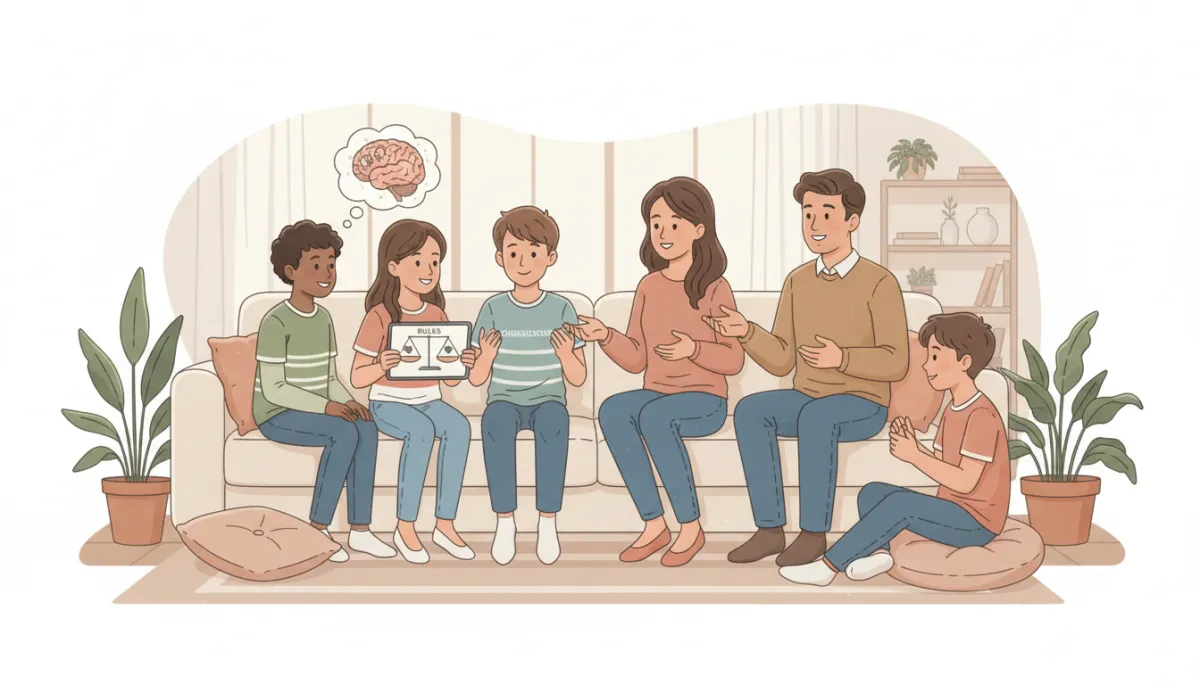
A powerful, often overlooked effective parenting strategy is to involve your tween in creating the family rules. When tweens help set the expectations, they are more likely to see them as reasonable instead of random grown-up demands. This is one of the simplest ways to make rules and consequences feel fair.
Pick your top 3–5 rules. Focus on what matters most: safety, respect, and responsibilities. For example: “Be home by agreed curfew,” “Speak respectfully,” and “Finish homework before gaming.”
Ask your tween for input. You might say, “What do you think is a fair consequence if you break this rule?” Their ideas are often more reasonable than you expect—and sometimes even stricter than yours.
Write it down. A simple chart on the fridge turns vague warnings into clear agreements. This reduces arguing later: you can point to the chart and say, “We agreed on this together.”

Co-creating rules gives tweens ownership and makes consequences feel less random.
This collaborative approach to parenting tweens does not mean your child is in charge. You still have the final say. It simply means you are inviting them into the process, which strengthens trust and makes tween discipline feel more respectful and less like a power struggle.
4. Natural and Logical Consequences: Your New Best Friends
When we talk about fair consequences, two types stand out as especially helpful for tweens: natural consequences and logical consequences. These are the backbone of many effective parenting strategies because they are built around cause and effect, not power and punishment.
Natural Consequences
Natural consequences are what happen without you stepping in at all. For example, if your tween refuses to bring a jacket, they feel cold at the park. If they forget their homework, they might get a lower grade or need to explain themselves to the teacher. These experiences can be powerful teachers when safety is not at risk.
⚠️ Safety Note: We never use natural consequences when your child’s safety is on the line. Helmets, seat belts, and online safety rules are non-negotiable, even if they do not feel “natural” to enforce.
Logical Consequences
Logical consequences are created by you, but they are directly related to the behavior. They answer the question, “How can my child repair or take responsibility for what happened?”
If your tween is constantly late coming home from a friend’s house, a logical consequence might be fewer or shorter visits for a week while you rebuild trust.
If they speak disrespectfully, the consequence could be taking a break from the conversation and then returning later to practice saying the same thing respectfully.
If they break or lose something they borrowed, they help pay to replace it or do extra chores to make up for it.
Logical consequences are powerful for tween discipline because they feel less random. Tweens can connect the dots: “I did X, so Y happened.” Over time, this builds internal responsibility, not just fear of getting caught.
5. Examples of Fair Consequences for Common Tween Situations
Every family and child is different, but it can help to see what fair consequences might look like in real-life situations. Use these as a starting point and adjust for your tween’s age, personality, and needs.
Scenario 1: Ignoring Screen Time Limits
Your tween has a clear rule: gaming stops at 8:30 p.m. You walk in at 9:00 p.m., and they are still online “finishing a round.”
Unfair response: “You are grounded from screens for a month!” (This is hard to enforce and does not match the size of the mistake.)
Fair consequence: “You chose to keep playing after 8:30, so tomorrow you lose 30 minutes of gaming time. Let’s try again then.”
This approach keeps the consequence connected to the behavior and gives your child a chance to practice following the rule again soon, which is key in effective parenting strategies.
Scenario 2: Lying About Homework
Your tween says, “I finished my homework at school,” but you later find out there was a missing assignment and a note from the teacher.
Unfair response: “You can never hang out with friends again. I cannot trust you.”
Fair consequence: “Because you lied about homework, for the next week I will check your planner and assignments with you before you can go online or text friends. We will rebuild trust together.”
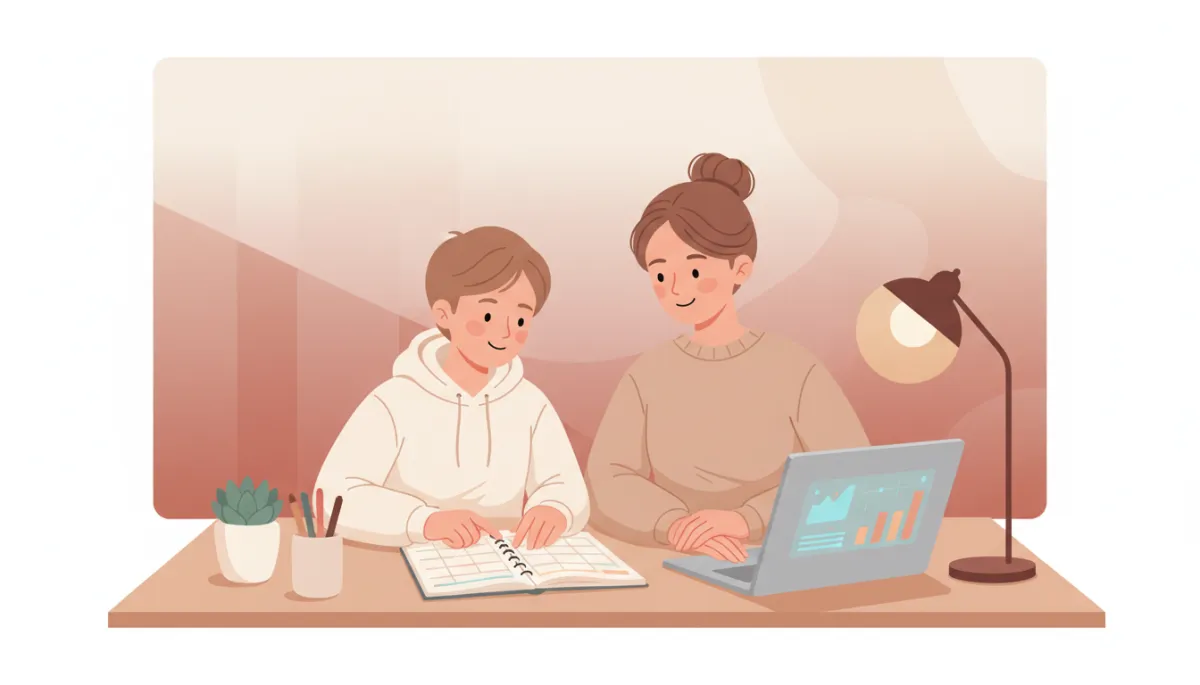
Linking privileges to responsibility helps tweens connect honesty with independence.
Scenario 3: Speaking Disrespectfully
Your tween snaps, “You are so annoying, just leave me alone!” when you ask a simple question. Ouch. This is a common hot spot in parenting tweens.
Unfair response: Yelling back, insulting them, or bringing up every past mistake in the heat of the moment.
Fair consequence: Calmly say, “I will not stay in a conversation where I am spoken to that way. We will take a 10-minute break, and then you can try again using respectful words.”
Here, the consequence is the pause in connection. They learn that how they speak affects the kind of relationship and privileges they have, which is a huge lesson in tween discipline.
6. Balancing Consequences with Empathy
Tweens are in a messy middle stage: not little kids, not full teenagers. Their brains are still developing, especially in areas related to impulse control, planning, and emotional regulation. Guidance for parents means remembering that mistakes are part of learning, not proof that your child is “bad” or “lazy.”
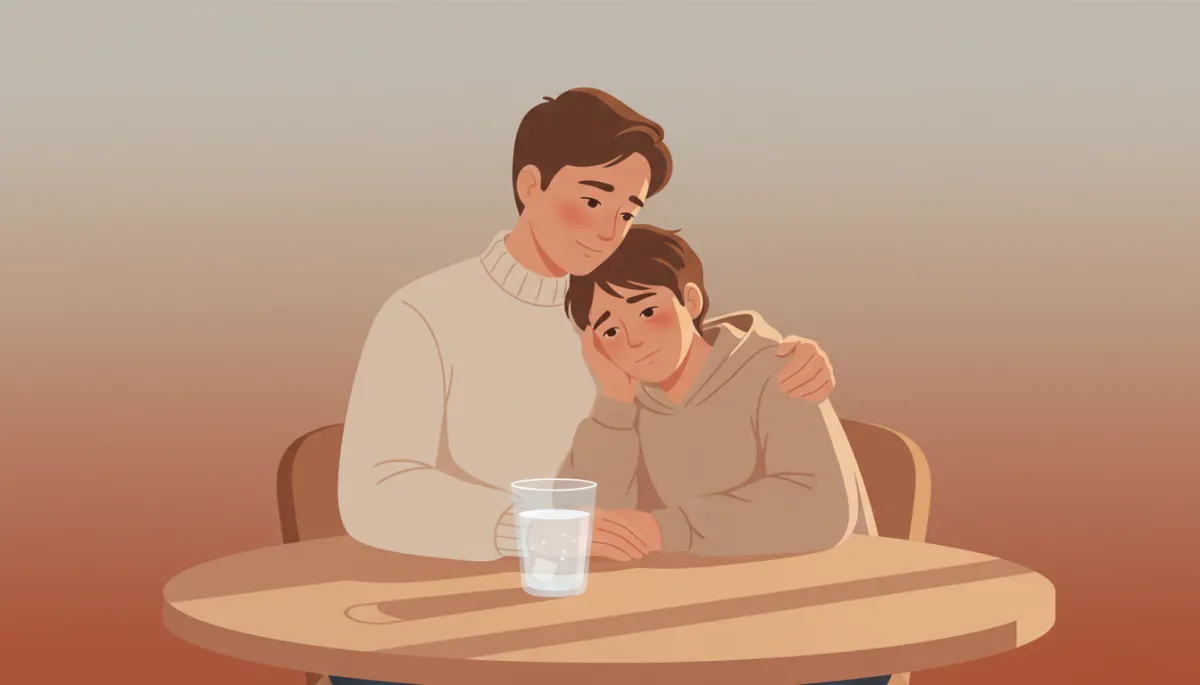
Empathy plus structure helps tweens feel safe enough to learn from mistakes.
You can be both firm and kind. For example:
“I get that it is hard to log off when you are in the middle of a game. At the same time, we have a rule about screen time, so tomorrow’s time will be shorter. Let’s figure out how to set a reminder so it is easier next time.”
“You were embarrassed about the homework, and that is understandable. Lying about it is not okay, though. I will sit with you this week while you catch up so you are not doing it alone.”
This blend of empathy and accountability is at the heart of effective parenting strategies. Your tween learns that feelings are valid, but actions still have consequences.
7. When Consequences Are Not Working: What to Try Instead
If you feel like you are constantly handing out consequences and nothing is changing, you are not alone. Many parents of tweens hit this wall. It might be time to adjust your approach to tween discipline and look beyond punishment.
Check the Connection First
Tweens are more likely to respond to your guidance when they feel connected to you. If your relationship has been mostly conflict and correction lately, try adding small daily moments of positive attention: a shared snack, a walk, a quick game, or simply sitting on the couch together without talking about behavior at all.
Look for Skills, Not Just Willpower
Ask yourself, “Is this a can’t or a won’t?” Sometimes what looks like defiance is actually a missing skill. For example, a tween who always forgets chores may struggle with organization more than with obedience. In addition to consequences, build in support: checklists, timers, or doing the chore together a few times to model the routine.
Use Positive Consequences Too
Consequences are not only about taking things away. When tweens follow rules consistently, add in positive outcomes: extra time with friends, later bedtimes on weekends, or more freedom with their devices. This shows them that responsible behavior leads to more independence, which is incredibly motivating at this age.

When tweens see responsibility leads to freedom, rules start to make sense.
8. A Quick Fair Consequences Checklist for Parents
When you are in the heat of the moment, it is easy to overreact. Use this simple checklist from the Parent Support Circle team to pause and choose fair consequences that actually support your long-term goals in parenting tweens.
Is my child safe? If safety is at risk, step in firmly and quickly. Consequences can be discussed later, when everyone is calmer.
Did they know the rule? If not, this is a teaching moment. Clarify the rule and set a clear expectation for next time before adding consequences.
Is the consequence connected to the behavior? If you cannot explain the connection in one sentence, it may not be logical or fair.
Is it proportionate? Does it match the size and impact of what happened, not just how frustrated you feel?
Can I follow through? If you know you cannot or will not enforce it, choose something smaller and more realistic.
💬 Try This Tween-Friendly Script: “We have a rule about __. You chose __, so the consequence is __. I know you can handle this and do better next time.”
9. Talking to Your Tween About Fairness
Because this guide is for tweens as well as parents, it can help to share your thinking out loud. Tweens are more likely to accept consequences when they understand the “why” behind them. Consider having a calm conversation at a neutral time—maybe on a walk or in the car—about how rules and consequences work in your family.
Explain that rules are there to keep everyone safe, respected, and on track, not to make life miserable.
Acknowledge that you are human too and sometimes react strongly, but you are trying to focus on fair consequences that help them grow.
Invite them to share what feels fair or unfair and listen without interrupting. You may not agree with everything, but you will learn a lot about how they see the world.
These conversations strengthen your relationship and make future tween discipline moments less explosive. Your child learns that your goal is not to “win” but to guide them—a core part of guidance for parents during the tween years.
10. The Big Picture: You Are Teaching Life Skills, Not Just Enforcing Rules
When you zoom out, every conflict about curfew, homework, or tone of voice is really about life skills your tween will need as a teenager and an adult. Parenting tweens with fair consequences is about helping them practice:
Taking responsibility for their choices.
Repairing relationships when they make mistakes.
Managing time, technology, and schoolwork.
Respecting boundaries—their own and other people’s.
None of this has to be perfect. You will have days when you lose your cool, hand out a consequence that is too big, or second-guess yourself later. That is okay. You can model repair by coming back to your tween and saying, “I overreacted. Let’s adjust that consequence to something more fair.” That moment alone is powerful teaching.
As the Parent Support Circle team likes to say, “You are not raising a perfectly behaved child—you are raising a human who knows how to learn, grow, and try again.” With thoughtful rules and consequences, plenty of empathy, and a willingness to keep adjusting, you are already practicing effective parenting strategies that will serve your tween for years to come.
So the next time your tween breaks a rule, take a breath. Remember what you are really trying to teach. Then choose a consequence that is clear, connected, and kind. Fair consequences will not make the tween years easy—but they can make this wild adventure a lot more meaningful for both of you.


